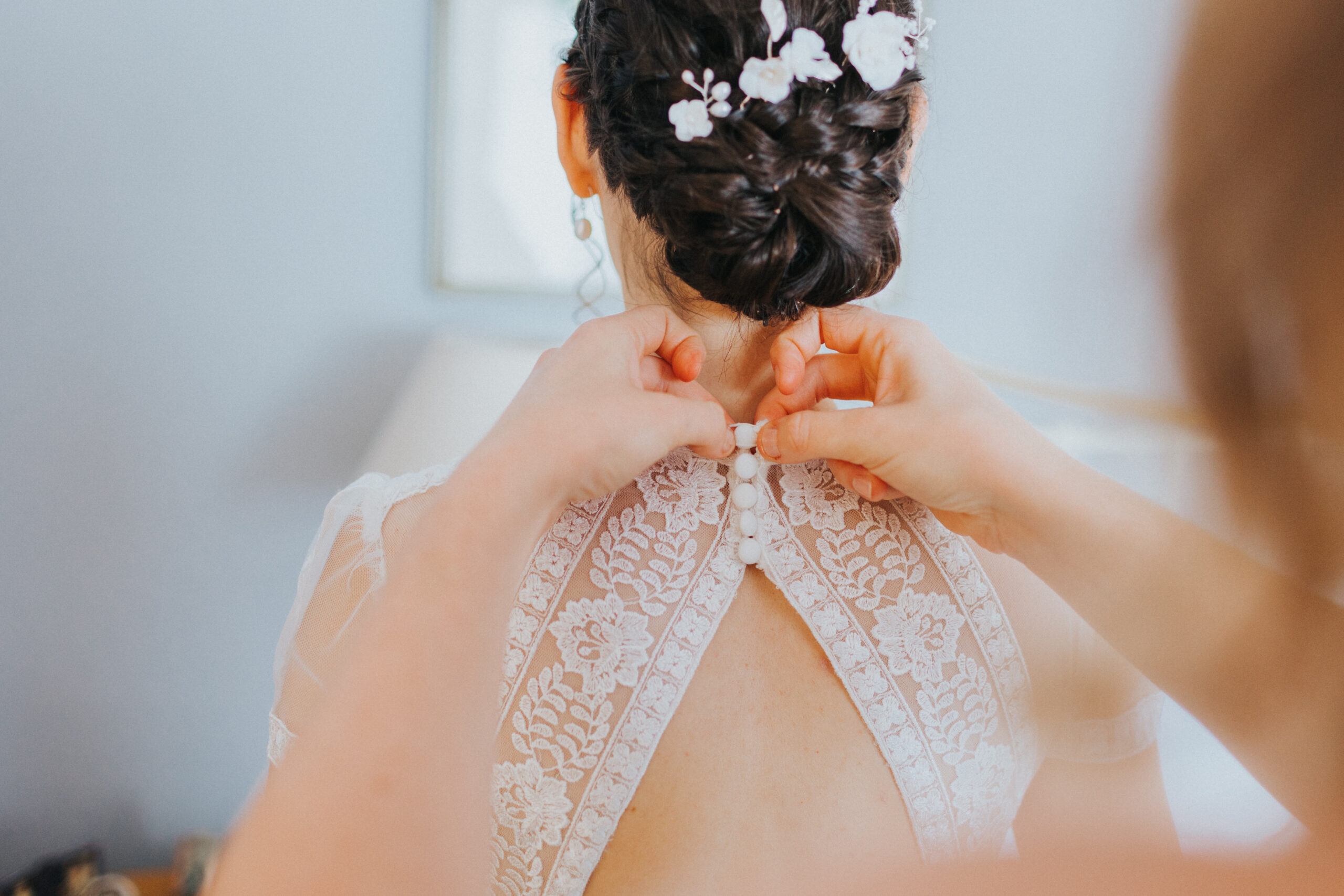
The timeline is one of those things that sounds boring until you don’t have one. Then suddenly you’re wondering why everyone’s standing around waiting, or why you’re meant to be cutting the cake but you haven’t eaten yet, or why your photographer needs you for portraits but you’re still pinning on buttonholes.
A good timeline doesn’t make your day feel structured or rigid. It does the opposite, it gives you freedom. Freedom to be present, to not worry about what’s happening next, to trust that things are flowing.
Start with the ceremony
Everything works backward from this. If your ceremony is at 1pm, that’s your anchor point. From there, you can figure out when you need to start getting ready, when your photographer arrives, when guests should be seated.
Most ceremonies run 20-30 minutes, but check with your registrar, celebrant or vicar. Some are longer, some shorter. Factor in time for guests to arrive and settle, usually about 30 minutes before you’re due to walk down the aisle.
Photography takes longer than you think
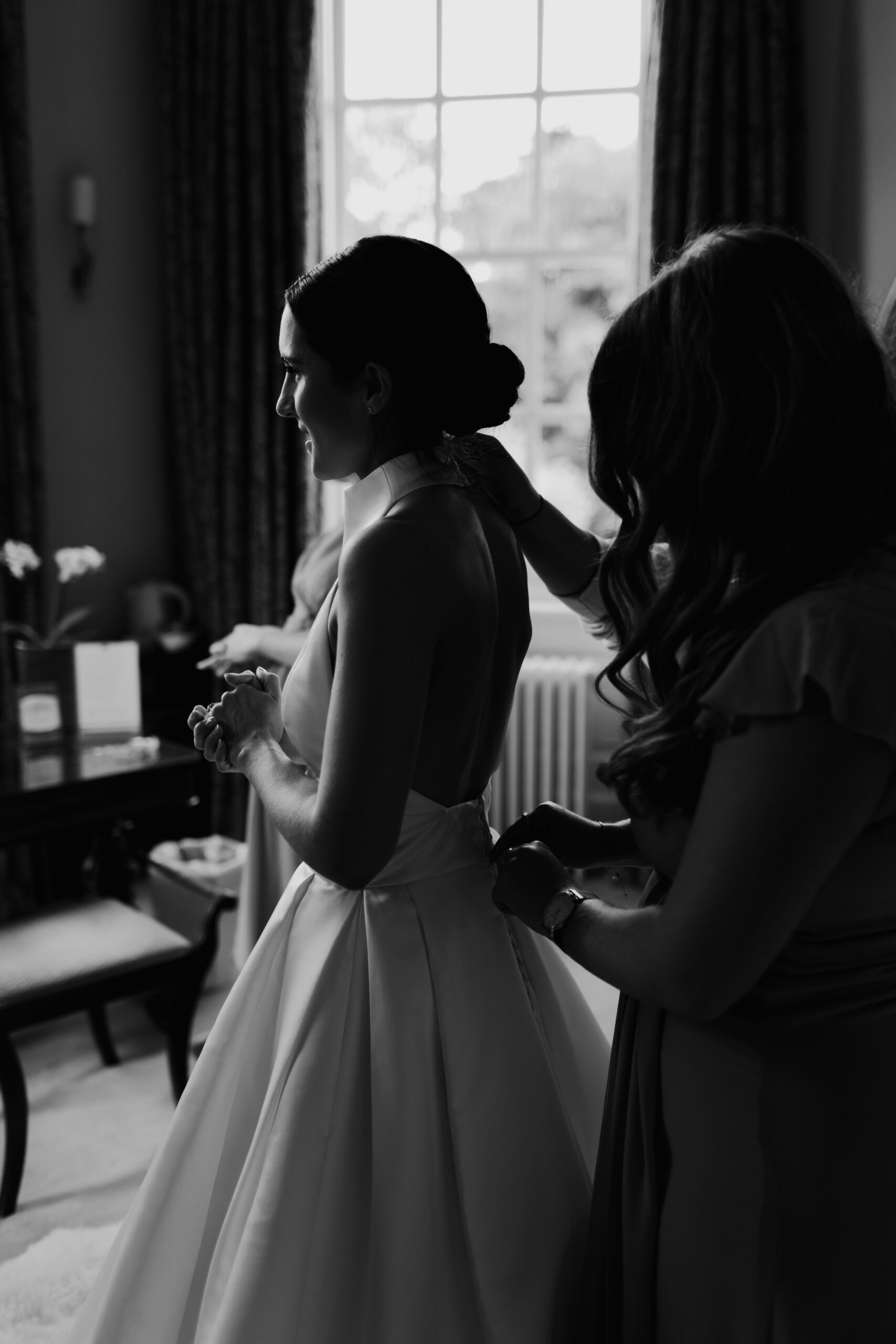
This is where couples usually underestimate. Getting ready photos aren’t just five minutes of someone photographing you putting on your dress. They’re the whole morning, the details being laid out, hair and makeup, moments with your parents, the nervous energy, the laughter with your bridesmaids.
Allow at least an hour and a half for getting ready coverage. More if you want it relaxed and unhurried.
If you’re doing a first look, add 30-45 minutes. Couple portraits are always something I’m quite quick with but I’d recommend setting aside 30 minutes in your timeline for this so we have buffer time. Family photos can take anywhere from 10 minutes to 30 minutes depending on how many you’d like.
Talk to your photographer about this. They’ll know how long things actually take versus how long you think they’ll take. Listen to them.
The drinks reception is your breathing space
After the ceremony, while your guests are having drinks and canapés, you get a moment. Maybe you sneak off for a few portraits in the golden hour light. Maybe you actually have something to eat and drink because you’ve been too nervous all day. Maybe you just sit together for ten minutes and let it sink in that you’re married.
An hour and a half to two hours is standard. It’s enough time for guests to mingle and for you to regroup before the reception.
Reception flow
Introductions, dinner, speeches, cake cutting, first dance, party. Most receptions follow some version of this, though you can shuffle things around to suit you.
Dinner usually takes 1-2 hours depending on your guest count and service style. Speeches can run 15-30 minutes, though they often go longer (there’s always someone who didn’t stick to their time limit). Dancing typically fills the rest of the evening – 2-3 hours of celebration.
Build in buffer time
This is crucial. Things run late. Hair takes longer than expected. Traffic happens. Someone’s button pops off and needs resewing. Your aunt wants one more photo.
Add 15-30 minutes of buffer between major events. It means if something does run over, you’re not immediately behind schedule. And if everything goes smoothly, you’ve just got a bit of breathing room.
Share the timeline
Once you’ve worked it all out, send it to everyone who needs it. Your photographer, your coordinator or planner if you have one, your venue, your caterer, your DJ or band, your hair and makeup artist, your wedding party, your parents.
Everyone needs to know where they should be and when. It prevents the day-of “what’s happening now?” questions and means your suppliers can do their jobs properly.
Then let it go
Here’s the thing about timelines, they’re a guide, not a rule. You make one so you don’t have to think about it on the day. So you can trust that someone else is keeping track of time while you’re busy getting married.
Things won’t go exactly to schedule. They never do. Someone will cry during speeches and it’ll run long. Your photographer will spot perfect light and want five more minutes for portraits. Your guests will be having such a good time during the drinks reception that dinner gets pushed back slightly.
That’s fine. That’s normal. That’s your wedding day being a real, human experience rather than a carefully choreographed performance.
The timeline exists to serve you, not the other way around. Use it to create structure, then be willing to let the day unfold as it needs to.
If you’re feeling overwhelmed by timeline planning, talk to your photographer. We do this every weekend, we know what works, what doesn’t, and how to fit everything in without it feeling rushed. We can help you build something realistic that gives you the coverage you want while still leaving room for the day to breathe.
Because at the end of it all, the timeline is just logistics. What matters is that you get to marry the person you love, surrounded by people who care about you. Everything else is just details.
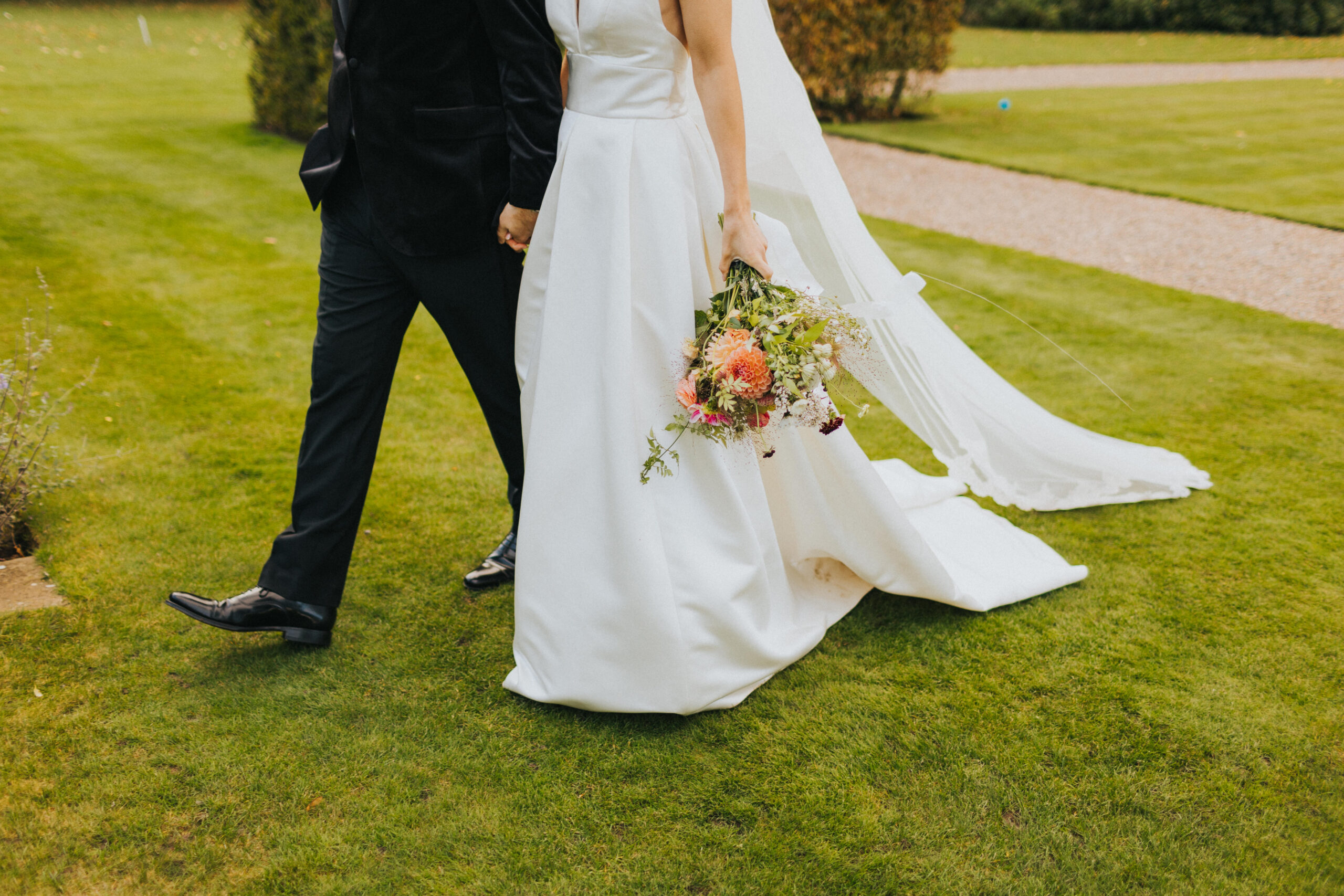
Shropshire Wedding Photographer | Wedding Planning Advice










Comments